Thursday, August 16, 2012

Tom Jackson's Live Music Method

Buy the book from On Stage Success

I started out by attended one of Tom's speaking engagements and was really impressed at the impact of the makeovers of the bands who were present. While there is nothing quite like seeing this, his new book is a wonderful reference for all the material.

His material includes so many things that, once you hear and see them, your reaction is: "Well, that is obvious" except that you'd never think of them yourself. The result is that thay are easy to internalize and apply, albeit with practice to make them your own.

At the session I attended, I got talking to a booking agent at the mixer. He was there not to learn performance but to learn to see what would make people effective in the venues he was booking for. That he found the session highly instructive is telling and a clear message to performers who fail to hone their technical performance skills and  their show's performance aspects.

Subsequently I've enjoyed the DVD set.

The book includes the material presented in Tom's speaking engagements and the DVDs in a thorough way that lets one reflect on the material. It is a great reference.

Thursday, May 24, 2012

My New Book

I just finished my book about the Eigenharp.

With the advent of the Workbench tool in Eigenlabs version 2 software there is now a great way to explore the setups that configure the instrument visually.

While workbench is primarily a tool for creating setups, it can also provide deep insights into any existing setup.

One of the challenges for people who might be interested in an Eigenharp is that they are difficult to find in a retail setting and, even if you do, there is typically no knowledgable person to walk you through what the instrument is capable of.

My hope is that this free book will help in that regard.

Friday, March 9, 2012

Playing to the Moon

Playing to the Moon by mikemilton
Playing to the Moon, a photo by mikemilton on Flickr.

I'm a early riser and have taken to playing my Eigenharp in the dark.

This morning was cold so I lit a fire, moved the chair and as I was sitting noticed this reflection of the instrument in the window against the moonset

Wednesday, July 20, 2011

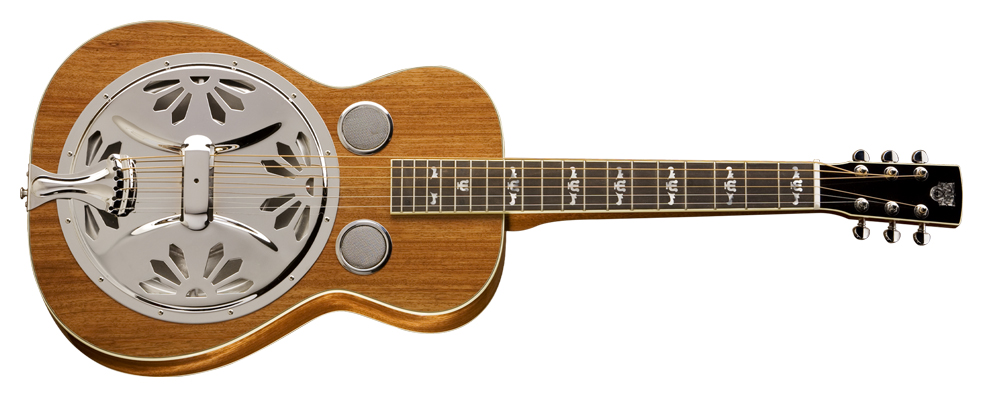
Harmos Guitar on the Rocks

Harmos Guitar on the Rocks by mikemilton
Harmos Guitar on the Rocks, a photo by mikemilton on Flickr.

I've been looking for one of these for quite a while and missed out on a sale of a 7-string version.

Patience pays, I guess, and this Americana 6 string has a new home.

It has an amazing ability to sustain and an interesting character to the sound (the resonant frequency of the guitar is quite high).

Friday, July 1, 2011

Thanks for the picks, Dave!


Dave got me a whole bag of these great picks. It took a month to arrive but, with the maple leaf it is perfect for today, Canada Day!

Saturday, June 25, 2011

Variability to Randomness

John Morley via Twitter: Comment from someone about DIY electronic instrument: "You never know what it is going to do"
I thought it was an interesting quote. I strongly believe in some degree of purpose in the instruments I use. I like to know what I am doing
Many traditional instruments have a degree of unavoidable variability in being played. Great players manage and even use this but it never disappears. Consider, for example, reed instruments, fretless string instruments and so forth. But it is not that the instrument is variable, it is that the interaction, the playing, is variable

In contrast, many electronic instruments are highly predictable and precise. Consider how round-robin application of multiple samples is often used to simulate the variability of the traditional instrument on a device that can be played in a completely repeatable way (many can *only* be repeatable)

There is one (well, probably more) key difference however. The player is part of the variability on the traditional instrument - the variability is nuance not randomness.


I believe that this leads to a profound tactile involvement between the player and the instrument that leads to expressiveness that is otherwise unattainable.

This point emerges from the discussion in the video to the right as well.


Tuesday, May 24, 2011

Summer Studio

Also known as the porch at the log cabin


- Posted using BlogPress from my iPad

Wednesday, May 4, 2011

A Tale of Two Capos

One challenge of some tunings is that they create more tension than desirable and one solution to this is to use a capo.  I described using a Shubb capo on a round neck Republic in an earlier post but have a similar issue on the Moog Lap Steel because, I'm told, its piezo pickups will not withstand tuning to GBDGBD.

Also, Shubb does not make a capo suitable for a squareneck or accommodating of the high string height of the MLS. So, I thought I'd try the Beard capos out.

There are two models to choose from so it seemed worth having a look at them both.

They come packaged in a bit of plastic tubing and arrived quickly.


Both work similarly. They have metal bar that is coated with a soft material which can be loosened in order to leave a gap between the body and the bar.

The bar is then inserted between the strings, the capo is rotated 90 degrees so that it crosses the strings and then the bar is tightened so that the capo is secured and the strings are in firm contact with the body of the capo.

The capo 'floats' on the strings and hence neck thickness and string heights are not an issue except that the action must be high enough to accomodate the bar under the strings.

Here is a shot of the brass version mounted in the strings.

It is exceptionally well made and finished.  This version has both a nut replacement and additional damping material. The nut material is firmly fastened to the body

From below you can see how the additional soft material intended to dampen the strings above the body works.


The other capo is a simpler, much more elegant, but missing both the nut material and the dampening of the strings behind the capo


Here is what they look like from the front:


Both are easy to attach and adjust although the 'well' in the brass version is less pronounced and the strings do not catch in it. Their appearance might appeal more or less, but that is an individual choice and each will have their own following.

So, do they sound different?

The strings above the capo vibrate with both capos. This seems to be a factor with any floating capo but it does not seem to affect the sound.

The nut material on the brass capo yields a sound more like the guitars nut while the metal one seem slightly brighter (which may be preferable)

The metal capo is prone to rattle on the top (thinner gauge) strings unless it is (very) firmly tightened. That said, it has a much larger tension knob allowing for this. I can't help but wonder dampening material similar to the brass one might not help with this.

On the MLS, sustain is not an issue but the steel one seems to have better sustain on my Republic and Dobro guitars.

My Take:

  • the steel one looks better to me
  • the sound of the brass one is preferable for my use
  • the level of tightening required by the steel one might cause wear to the soft material sooner
If I were buying just one for the MSL, I'd pick the brass one. If I were buying just one for playing blues on a metal bodied reso, I'd buy the steel one. Both will get use in my kit.

Wishlist....  I wish the steel one had similar dampening material on the underside.


Monday, April 11, 2011

Moog Lap Steel - Serial No 002

Well, it has arrived and is the first delivered to a customer.

Both Cath and I have been playing it for a few days. Interestingly, Cath finds it easier to play than our other guitars.

logo

Don't Fret

Monday, January 17, 2011

Moog at NAMM 2011

From emusician.com  

"Meanwhile, at the Moog booth, one of the new products on display was the Moog Lap Steel ($2,800). The six-string lap steel has the same circuitry as the Moog Guitar. These instruments are being built on a custom basis only, and currently only four exist, including the one they had at the booth. It offers infinite sustain, controlled sustain, and mute modes, and has a Moog filter built in that can be controlled with a foot pedal. As a steel player myself, my mind was boggling at the sonic possibilities. Connected up to an array of effects pedals, one could make some serious sounds."


I guess mine will be one of the early ones. Surely the first in Canada and perhaps #5 - who knew!

Saturday, January 8, 2011

Touch as Part of Expressiveness

John Morley just posted an interesting thought about the WaveDrum as an example where technology did not serve to dehumanize music in the way that many use quantization and pitch correction.

I agree whole heartedly.

What struck me as quite important was the mention of the connectedness of instrument and player as an important factor. For me the fact that the wavedrum is not a pad but a real drum and highly tactile is quite critical. It also makes for quite a contrast with button or pad based 'drums'.

This is one aspect of the Eigenharp that fails to get a lot of notice; it is a very tactile device.

Say Eigenharp, and you are sure to hear expressiveness in the resulting conversation.

Now it is surely true that the time granularity (2000 samples/sec) and the resolution (1024 levels) is an important and differentiating enabler of expressiveness. However, it is just as important to note that the keys are extremely tactile. The force required and the physical feedback from the keys results in a connection for the player that is, well, sensual. Further, while one can play a run of individual notes, the system as a whole is tweaked so well that running your finger down a course of keys can also sound and feel much like running your finger down a continuous string (it does not matter that, technically that isn't what is happening)

Surely one could build (for example) a pad with that sample rate and bit depth. They probably exist. But this tactile aspect and the instrument/player connection that results is a critical component of enabling expressiveness.

Friday, December 24, 2010

Gibson Dusk Tiger


Gibson Dusk Tiger
Originally uploaded by mikemilton
This is just a little video to show how the Dusk Tiger tunes itself.

In this shot the guitar initially tunes to standard tuning, which it does by default each time it is turned on (and, yes, one can just tune manually and play if you wish).

The guitar is then set to an Open tuning and strummed. I like accuracy so I have the guitar set so that it re-tunes to accommodate any neck bending when the tuning change is significant

Eigenharp Alpha with DPA Microphone

The DPA Microphone is a great addition to the Alpha. It plugs in just beside the breathpipe and includes a mount on a new breath pipe mouthpiece which the mic can clip to.

It is an electret mic for which the Alpha provides the polarizing voltage (the voltage levels can be selected either by belcanto or by the control keys as can the various controls such as vol, pan, effect send, etc)

Friday, November 26, 2010

Winter Studio


Winter Studio
Originally uploaded by mikemilton
Click on the picture to see this in Flickr (where there are notes on each item)

We moved south yesterday (yes, I know, we punted but it looked like the lake was icing over)

At lease there is more room to organize music and computing here

Thursday, November 25, 2010

Komplete

I've been using the Komtakt player and Guitar Rig4 (which cam with my Gibson) for some time and decided it was time to 'Komplete' the suite.

It is delivered on 12 dual layer DVDs. So it will be interesting to explore all that content.

Monday, November 15, 2010

O'Brien Set


O'Brien Set
Originally uploaded by mikemilton
This lovely set of O'Brien Whistles sounds as good as it looks.

One fipple end-piece and 3 2-piece lower sections (D, C, Eb)

The fit is superb and the wood is well crafted. A variety of woods are available

Republic Reso GBDGBD


Republic Reso GBDGBD
Originally uploaded by mikemilton
I'm waiting (not so patiently) for my Gibson Squareneck Dobro and wanted to work on 'standard' tuning but GBDGBD is a bit much for a round neck.

Here is my trusty National with a nut extender and a Dobro capo. It is actually tuned to FACFAC but the capo nicely makes this what I want.

The capo has a metal bar that sits over the fret and under the strings. It can be rotated to accommodate higher string heights. A rubber-covered bar sits slightly to the head-side of the lower bar pressing the strings down and dampening any sound from the upper portion of the strings.

I'm busy practicing a bunch of Christmas songs for the holidays. They are an interesting thing to play on reso.

Friday, September 3, 2010

SX Lap Steel

So, Having ordered the square neck Dobro, I needed something to practice on while waiting for it to arrive.

This little lap steel was an obvious answer. It was incredibly inexpensive, came with a nice case and sounds amazingly good all things considered.

It was immediately tuned to GBDGBD and both Cath and I are quickly working on our first songs.

By the way, I can heartily recommend Lessons with Troy,  as a source for good instruction at reasonable cost. His videos are great.

Sunday, August 29, 2010

Celebration Day

Yesterday was our annual celebration day with a family we know. It is easier to pick one day than deal with birthdays and other events and it makes for a great day.

This year I got everyone some ethnic instruments such as a Digeridoo, rain sticks, queros, shakers, thumb pianos, etc.

It was at least a novel idea.

Perhaps a Digeridoo is a good complement to the Alpha?

New Guitar on Order

I'd be much more excited if it was not for the fact that it might take a year to be built and delivered. It seems they only make them as they are ordered.